This is default featured post 1 title

Go to Blogger edit html and find these sentences.Now replace these sentences with your own descriptions.

This is default featured post 2 title

Go to Blogger edit html and find these sentences.Now replace these sentences with your own descriptions.

This is default featured post 3 title

Go to Blogger edit html and find these sentences.Now replace these sentences with your own descriptions.

This is default featured post 4 title

Go to Blogger edit html and find these sentences.Now replace these sentences with your own descriptions.

This is default featured post 5 title

Go to Blogger edit html and find these sentences.Now replace these sentences with your own descriptions.

sabato 22 gennaio 2011

BMW 328i Sedan


3.0-liter, inline 6-cylinder engine
230 horsepower
Rear-wheel drive


It's a sound experience as remarkable as the BMW driving experience. Unlike traditional stereo systems, Logic7 routes two-channel (stereo) sound through a seven-channel playback matrix to create 360-degree Surround Sound. The anti-theft AM/FM stereo CD/MP3 player audio system includes 13 upgraded speakers (including 2 subwoofers), Digital Sound Processing (DSP), Radio Data System (RDS), Auto-Store and 3-channel FM diversity antenna, and it displays MP3 song title and artist.

Can a vehicle be too responsive? Not if you're looking for a dynamic performance that actually adapts to the way you drive. Our 6-speed STEPTRONIC automatic transmission adapts to every driver differently, resulting in improved gear shifting, a more responsive performance, and reduced fuel consumption.

It operates in three modes: sport, which features higher shift points for more lively response; drive, which incorporates BMW's Adaptive Transmission Control; and manual, which allows the driver to assume control of gear selection.

In short, 6-speed automatic transmission provides faster, smoother shifting and enhanced fuel-economy. And if equipped with our Formula 1 inspired steering wheel-mounted paddle shifters, you can upshift and downshift quickly without using a clutch.

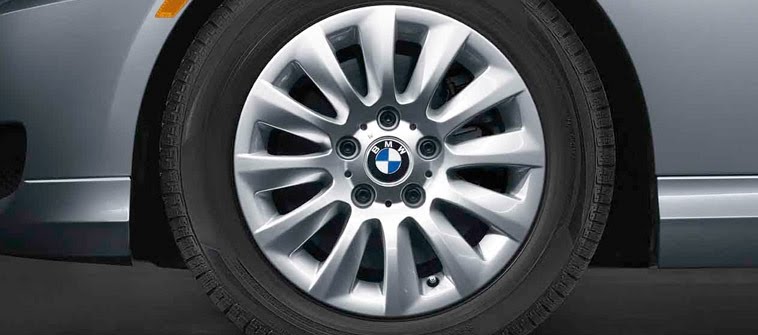
These self-supporting tires with integrated reinforcements allow tires that have experienced a loss of air pressure to maintain their shape and full use. In fact, you can drive on a flat for up to 150 miles at reduced speeds, so you don't have to stop in an unsafe area to change a tire or wait for roadside assistance.*

* Cars with run-flat tires do not come equipped with a spare tire. Due to low profile tires, please note that wheels, tires and suspension parts are more susceptible to road hazard and consequential damages.


Source by bmwusa

2009 Nissan Murano

2009 Nissan Murano – Click above for high-res image gallery

It just so happens that the all-new 2009 Nissan Murano is one of those nondescript mid-size crossover utility vehicles that may blend into the crowd. Its styling is certainly modern, if not overly exciting. The cabin is accommodating, if not excessively spacious. The handling is inspiring, if not unduly sporty. The engine is strong, and even reasonably efficient. How would this perfectly acceptable, yet hardly over-achieving CUV handle five passengers and full luggage on a 1,000-plus mile road trip across the Southwestern desert? Read on to find out.


The task at hand was to deliver three adults and two children, with their overstuffed baggage, round-trip between Los Angeles and Phoenix in the middle of summer. It's a trip this writer has been doing for more than a decade, but always in a seven-passenger SUV (Chevrolet Suburban, Dodge Durango, Volvo XC90, etc...). Now, in a CUV with seating for five, we wanted to see how we'd fare (without resorting to strapping Aunt Edna to the roof).

The first-generation Nissan Murano arrived on the market as a 2003 model, the same model year the Infiniti FX made its debut. While Infiniti's FX offered concept-like styling on a sporty rear-wheel drive platform shared with the Infiniti G35, Nissan's Murano took a mainstream approach with its more conservative sheet metal and front-wheel drive architecture shared with the Nissan Altima. Arguably, the most innovative part of the Murano was its continuously variable transmission, or CVT.
A solid seller for Nissan, and popular with consumers, the Murano was re-designed for 2009 (there was no 2008 model). With little fanfare, the second-generation arrived looking much like the first (expected, as Nissan didn't want to ruin a winning formula). The significant improvements were found on the interior where the all-new Murano had taken hint and grabbed more than a few components from the Infiniti parts bin. Compared to its predecessor, the 2009 Murano is a major step up in interior quality and ergonomics, although it is down on overall cabin space. We were bound to see if it mattered.
Under the hood of the Murano is Nissan's very familiar VQ-family 3.5-liter V-6 powerplant. While the first-generation Murano also had a VQ, Nissan has revised it for the 2009 model to provide 265 hp and 248 lb-ft of torque. The engine isn't the smoothest out there, or the most frugal with fuel, but it has proved to be consistently strong and very dependable. Mated to the six-cylinder is Nissan's Xtronic CVT™ (Continuously Variable Transmission) with Adaptive Shift Control (ACS). While the engine/transmission combo is set in stone, consumers are offered the choice between front- and all-wheel drive.
We are holding the keys to a 2009 Nissan Murano SL 2WD with the Premium Package. With cloth interior and no navigation, the sticker price fell just below $30,000. The Murano is a four-door, five-passenger vehicle with a lifting hatchback over the rear cargo area. The tapered styling in the C-pillar looks great, but it does impede on cargo capacity. Regardless, once we yanked out the cumbersome cargo cover, the mid-sized Nissan happily swallowed three wheeled suitcases, two large duffel bags, an overstuffed camera bag, and the obligatory bags of miscellaneous family debris that are required to keep the kids entertained during an extended drive. With everything strategically loaded, including a pillow or two in the second row, we could just barely see out the back window.

Behind the wheel, your author's six-foot two-inch frame fit very comfortably. There is plenty of legroom for the left foot even behind the pedals for stretching out (rare these days with the proliferation of transverse-mounted engines keeping firewalls up against the backs of the pedals). The exterior mirrors are generous, yielding a great view outside, even if thick C-pillar restricts a bit of outward visibility from within the cabin. Our Murano had the rear back-up camera, and it was very useful during parking. As expected, the CUV driving position is elevated giving a commanding view of the road.

The dash of the Murano is logically designed, and it works well once your mind is acclimated. The most offending part of the dash has nothing to do with ergonomics – it has to do with the garish back-lighting. The primary instrumentation (speedometer, tachometer, and gauges) are white characters over a dark background with bright orange indicator needles. That's fine. However, someone at Nissan went amok with the lights and added bright rings of orange around the primary gauges. The illumination is overpowering, and it effectively removes the driver's ability to quickly glance at the panel to distinguish the position of the orange needles. We overcame much of the glowing orbs by turning the dashboard illumination down. Way down.
With the aforementioned luggage already loaded, we ran into a bit of a bind. The two kids in the second row wanted to watch a movie on a portable DVD player, but Nissan didn't supply those seating positions with a 12v outlet. The single front outlet was powering our Garmin GPS (and we didn't have a splitter on hand), so we improvised by threading a long cord from the single 12v outlet in the cargo area through the luggage and into the passenger seat area. It worked, but we'd prefer too many outlets to too few next time.
What the Murano engineers did right was the powertrain. The matchmaker who hooked up the VQ with the Xtronic VCT deserves a promotion. In fact, after spending countless hours with the pair, we observed that it just may be the perfect mechanical marriage for this vehicle. While we've had our issues with the CVT (often when we find it stuffed under the wrong hood), the Murano doesn't pretend to be a four-door sports car, an off-road explorer, or a luxury liner. It's a family oriented CUV, and in that capacity the CVT operates smoothly, predictably, comfortably, and efficiently. Coming from a traditional slushbox, the Xtronic may seem a bit lethargic at first. But, that sensation quickly wanes when your right foot learns to drive it properly.
All five of us loaded into the Murano preparing for the six-plus hour drive to Phoenix. The car seat in the middle of the second row split the rear passengers up, but there was plenty of wiggle-room on either side. Nobody complained about space, even the person sitting behind the driver's seat. All Murano models share the same twin-tube strut/shock arrangement with front and rear stabilizer bars. Unlike many cars that wallow and roll when packed to the brim, the Murano handles nearly the same-regardless of load. While it would hardly be considered "enthusiast-tuned," one could easily argue it is much sportier than many of the other CUVs that compete in the segment. It is fun to drive, but it will not satisfy the enthusiast deep within you.
Across the LA Basin, the Murano easily darted through the light freeway traffic as we headed out of town. The freeways are deeply grooved and scattered with expansion joints (for earthquakes, not freezing temps), but the Nissan ignored the tendency to tramline and soaked up the bumps without drama. The crossover breezed through San Gorgonio Pass and its giant wind farms without flinching in the sporadic crosswinds.
In the mid-day sun, the ambient temps began to climb into triple-digits. Driving east out of Indio on I-10, the highway climbs more than 1,700 feet to Chiriaco Summit. It's a steep climb (some portions have an 8% grade) that frequently overheats, or just plain overwhelms, many types of vehicles. Loaded with full passengers and luggage, our A/C pumping at maximum, and a heavy tank of gas (having just topped-off minutes earlier), we were the Murano's worst nightmare. Without hesitation, the VCT brought the engine up to speed and the VQ pulled us heroically at 70 mph past the burdened tractor trailers that struggled in the right lanes. Through Blythe, the temperature outside was a blistering 113 F, but we were as cold as Popsicles inside the cabin (in fact, we had slowly cranked the AUTO climate control setting up to 76 F so we wouldn't go numb).

Over the Colorado River, and into Arizona with its 75 mph speed limit, the traffic lightened and we set the cruise control at an even 84 mph to remain relatively inconspicuous among the flow. We noted how accurate the speedometer was (typical with most Nissan/Infiniti products), and how absolutely serene the cabin felt at this speed. With smooth black asphalt under the all-season tires (keeping tire roar at bay) and cloth interior acting as sound-deadening, all aboard were impressed at how quiet things were considering the Category 1 hurricane winds on the other side of the glass. While we've tested countless cars that lose their composure above 80 mph, from the driver's seat the Murano was completely competent and stable at those high cruising speeds. It was disheartening to approach Phoenix and slow to city speeds, and lane-clogging traffic.
During our countless highway hours behind the wheel, the most excitement arrived in the middle of the California desert, just outside Desert Center. We'd been watching a wall of thunderclouds on the horizon for the better part of an hour. Temperatures were in the triple-digits, but the sun soon disappeared behind the cumulonimbus clouds as we approached. Minutes later, we drove into a literal waterfall as the skies violently opened up. One second we were dry and doing 80-plus mph, the next second we were fighting for visibility with the wipers on high-speed and our velocity down to 40 mph or so. While the downpour stimulated our pulse, the Murano soldiered forth without concern. The ride height kept us out of the splashing spray from the trucks, and the front and rear wipers (and aerodynamics) keep the windows clear. The rest of the trip was uneventful.
We burned four tanks of premium gasoline during our travels (including a few days running around the Phoenix basin). Calculated by hand, our worst fuel economy was 19.96 mpg, and our best was 22.31 mpg. When you consider each of those tanks were consumed while lugging five souls around with the air conditioning fighting Sahara-like temps, the numbers aren't bad (for the record, the EPA rated the 2009 Murano at 18/23). We never tried regular-grade gasoline, although rumor has it that the Murano will drink it just as happily.
With the long week behind us, it was obvious that five passengers (and their luggage) can cohabitate peacefully in the Murano for 1,000-plus miles without any hint of pending bloodshed. Sure, the mid-size Nissan will never transport seven adults legally (Nissan will gladly sell you an Armada for that), but we'd make a good argument that even loaded to the headliner, the 2009 Murano is an agreeable place to pass the time. Interestingly enough, we never missed the extra room that the engineers apparently took from the new model.
The 2009 Nissan Murano is one of those vehicles that accomplishes everything with very high marks, but aces nil. That's not to be taken as a negative -- it simply means that Nissan has done a fine job engineering a five-place CUV that is a solid B-plus performer across the board. The engine is strong, transmission smooth, and the driving dynamics comfortable and predictable. Pressed into service, it will duly serve as a reliable daily driver, impromptu cargo hauler, sporty canyon cruiser, or an effortless road trip vehicle.
source by autoblog.com

venerdì 21 gennaio 2011

BMW 128i Coupe


128i Coupe
40 years in the making.
Starting at $29,150 MSRP
3.0-liter, inline 6-cylinder engine
230 horsepower
Rear-wheel drive
28 mpg hwy*
What makes a BMW a BMW
What sets the 1 Series apart is what sets BMW apart—an unyielding dedication to the joy of driving. The BMW formula is succinct: Power. Performance. Premium design. Executed with innovation and efficiency.


More specifically—and unlike our competition—BMW maintains an unwavering belief in rear-wheel drive for superior handling. Near-perfect 50:50 weight balance for maximum agility, traction, and control. And a lightweight chassis and finely-tuned suspension for a sporty, yet comfortable ride.

All driven by independent thinking and an uncompromising culture of ideas. It’s how all BMWs become Ultimate Driving Machines.
Trust BMW Assist to help you with your busy life through the optional Convenience Plan, available to all Safety Plan subscribers. When you're on the road, the Convenience Plan offers a helping hand 24/7.
Whenever you need it, receive personalized Directions, Traffic and Weather reports, BMW Search and Concierge services to not only recommend restaurants and hotels, but then send the destination address and phone number right to your BMW. You can make up to four operator-assisted calls per year with Critical Calling if your cell phone is not available or its battery is discharged.


Source by bmwusa

giovedì 20 gennaio 2011

Review: 2010 Hyundai Tucson Take Two


Conventional SUVs are all but dead, yet interest in sedans has not been surging. Instead, car-based SUVs with some promise of respectable fuel economy are currently hot. So a redesigned, four-cylinder-only Hyundai Tucson could not arrive at a better time. But it’s a crowded field. Why buy this one?

Along with the new Sonata, the redesigned 2010 Tucson expresses Hyundai’s intent to offer cars that appeal to the emotions and not just the pocketbook. With tall bodysides, creased fender bulges, and a complex angularity that resembles some recent designs from Ford of Europe, the new Tucson isn’t exactly beautiful, but does possess a upscale dynamism missing from previous Hyundais and is at least not forgettable or boring. The half-size-larger Santa Fe appears bland in comparison. The new Tucson’s grille might be a bit overdone, but it works with the rest of the design and is tasteful compared to some others in the segment (e.g. Honda).

Hyundai’s newfound emphasis on styling continues inside the 2010 Tucson, with complex surfaces, shapes, and color combinations successfully melding on the instrument and door panels. Though you’d never guess it from my photos, materials are perhaps the best in the segment. The plastics are hard, but those you’re most likely to touch are coated with soft-touch paint. The seats in the tested GLS are a combination of leatherette and sportily textured cloth and the armrests are comfortably padded. Hyundai seems to have finally figured out that slick leather has no place on a steering wheel; the leather wrapped around the Tuscon’s wheel actually enhances one’s grip (imagine that). Nothing looks cheap and everything feels unusually solid—almost European.

Alas, the IP’s functionality leaves much to be desired. First off, the center stack’s cap and satin-finished surround are both highly reflective, and proved hard on the eyes (and camera lens) on sunny days. The rear defrost button isn’t grouped with the other HVAC controls. Instead it’s located where a keyless start button would normally be found, and likely is found in Tucson’s so optioned. The console-mounted grab handles look nifty, but are too far away to actually be used. On the other hand, the mirror controls fall readily to hand. In too many cars one must lean to operate them, which makes proper mirror adjustment unnecessarily tricky.

One ergonomic sin could prove deadly. The slope to the center stack combines with the control layout to place the audio system’s tuning knob so far away that it cannot safely be turned while driving. Note to car makers, many of which now commit this sin, if usually to a lesser extent: do not place the tuning knob on the right edge of the head unit unless said head unit is located close to the driver. Adding insult to injury: the satellite radio tuner takes a few seconds to go from one channel to the next. I’ve noticed that some satellite radio tuners do this as quickly as a conventional radio tuners, others not. The Hyundai’s falls in the “not” column.

Typical of the segment, you sit high, but not so high as to feel tippy. The windshield is neither overly upright nor overly laid back—no A-pillar windowlettes needed. The front seats are comfortable and, between their bolsters and cloth center panels provide better-than-average lateral support. The Tucson might be Hyundai’s smallest crossover based on exterior dimensions, but it provides more rear legroom than the next-up Santa Fe. The rear seat could be a little higher for optimum thigh support, but comfort is generally good. Missing from the previous generation: a front passenger seat that folds forward to further extend the cargo floor—I’ve found this feature to be very handy in one of my cars—and a manual recline adjustment for the rear seat.

Why buy the Santa Fe if the Tucson has more distinctive styling and more rear legroom? Two possible reasons, now that a third-row seat is no longer offered in the larger SUV. The first: cargo volume. The Tucson is about ten inches shorter than the Santa Fe, and much of the dimensional difference is aft of the second row. There’s still a fair amount of cargo room in the Tucson, but some people will need more.

The second possible reason: the Tucson is only available with a 176-horsepower 2.4-liter four-cylinder, at least so far. While more powerful than the 2009 Tucson’s optional 2.7-liter V6, for 2010 the Santa offers a 276-horsepower 3.5-liter V6. If you want to race a Hyundai for pink slips in the SUV class, the Santa Fe V6 is clearly the better choice.

That said, the new four performs unexpectedly well in the new Tucson. It no doubt helps that, at 3,382 pounds even with all-wheel-drive, the Tucson weighs a quarter-ton less than the Santa Fe and Sorento. Even saddled with all-wheel-drive the four-cylinder engine never feels weak, and it can feel downright frisky on a curvy road when using the six-speed automatic transmission’s manual shift to keep the revs up. A six-speed manual transmission is also offered, but only with front-wheel-drive. The engine feels smooth throughout its range and is quiet up to 5,000 rpm. The noises it does make aren’t bad for a four. Unlike in the Kia Sorento (a close relative of the Santa Fe), I didn’t feel a strong need for a V6–though a turbocharged and/or direct-injected version of the four wouldn’t be unwelcome.


The automatic transmission was designed by Hyundai, offers a good choice of ratios (the four-cylinder engine would be less impressive otherwise), and avoids hunting among them. In other ways, it’s a typical fuel-economy-minded automatic. Shifts when using the manual shift aren’t immediate, and the transmission programming lugs the engine when driving in the 40-50 MPH range.

Fuel economy is better than I observed in the Sorento, again probably because of its relatively low curb weight. In typical around town driving, the trip computer reported 21.5 miles-per-gallon. Pressing the “eco” button added perhaps one MPG, with a minor impact on driveability. Aggressive driving reduces the reported miles-per-gallon to about 18.5. The EPA ratings suggest that a front-wheel-drive Tucson would do a couple MPG better.

An even bigger surprise than the performance of the four-cylinder engine: the new Tucson’s chassis tuning. Korea’s roads must not be the best, since Hyundai’s have traditionally been softly sprung. Not this one. The Tucson’s chassis tuning feels German more than anything else, with a very taut feel. A solid-feeling body structure assists. The downside of this tuning: in casual driving the ride can feel annoyingly nervous, and even modest bumps elicit thumps. The upside: driven aggressively on a curvy road, the Tucson is actually fun. Sure, with a high center of gravity and nose-heavy weight distribution it feels tall and understeers, but the chassis feels tight and precise. If only the somewhat heavy steering provided some feel of the road, the Tucson could well be the enthusiast’s choice in this segment.

Either because higher cost mean they must or simply because they can, Hyundai isn’t offering the Tucson at a bargain price. The 2010 starts at $19,790. Add the automatic, all-wheel-drive, the Popular Equipment Package (cruise, alloys, other things most buyers will want), and nav, as on the test vehicle, and you’re suddenly looking at $25,990. Which sounds high for a car without leather, sunroof, or power driver seat, but just about anything comparable is higher. Just not as much higher as it would have been in past years. Honda only offers nav with the CR-V on the EX-L. Lose the nav and compare the Tucson GLS to the CR-V EX, and the Korean SUV lists for $1,815 less. A good chunk of the difference is in dealer margins, though. Compare invoices, which more closely reflect what you’ll actually pay, and the difference is about $1,100. A Toyota RAV4 runs a few hundred higher than the CR-V. Like the Santa Fe, both the CR-V and the RAV4 offer substantially more cargo room than the Tucson. Otherwise they’re closely matched.

The Hyundai Tucson is surprisingly good in some key areas, especially styling, four-cylinder powertrain performance, interior materials, and handling. It’s already worth consideration by anyone shopping for a vehicle in this segment. But there are nevertheless some shortcomings. One of these, class-trailing cargo volume, cannot be fixed without a complete redesign, and unless the Santa Fe grows there’s little need to fix it. Others Hyundai could and should work to improve. Make the steering as good as the rest of the chassis and redesign the center stack, and the new Tucson would be a clear winner. Add the turbocharged four that’s been announced for the Sonata midsize sedan, and even driving enthusiasts who desire the packaging of an SUV (they’re alleged to exist) would flock to Hyundai showrooms.

Source Thetruthaboutcars

mercoledì 19 gennaio 2011

Holden Efijy Concept (Holden Concept)


Share

Twitter Delicious Facebook Digg Stumbleupon Favorites More